The short answer
Two forms of collective land tenure exist in Mexico. An ejido is an area of land held collectively by a rural community, allocated to it by the State under agrarian law and worked by its members. A comunidad — land held as bienes comunales — is territory recognised as historically belonging to a specific, usually indigenous, community. Together they are known as propiedad social: social property.
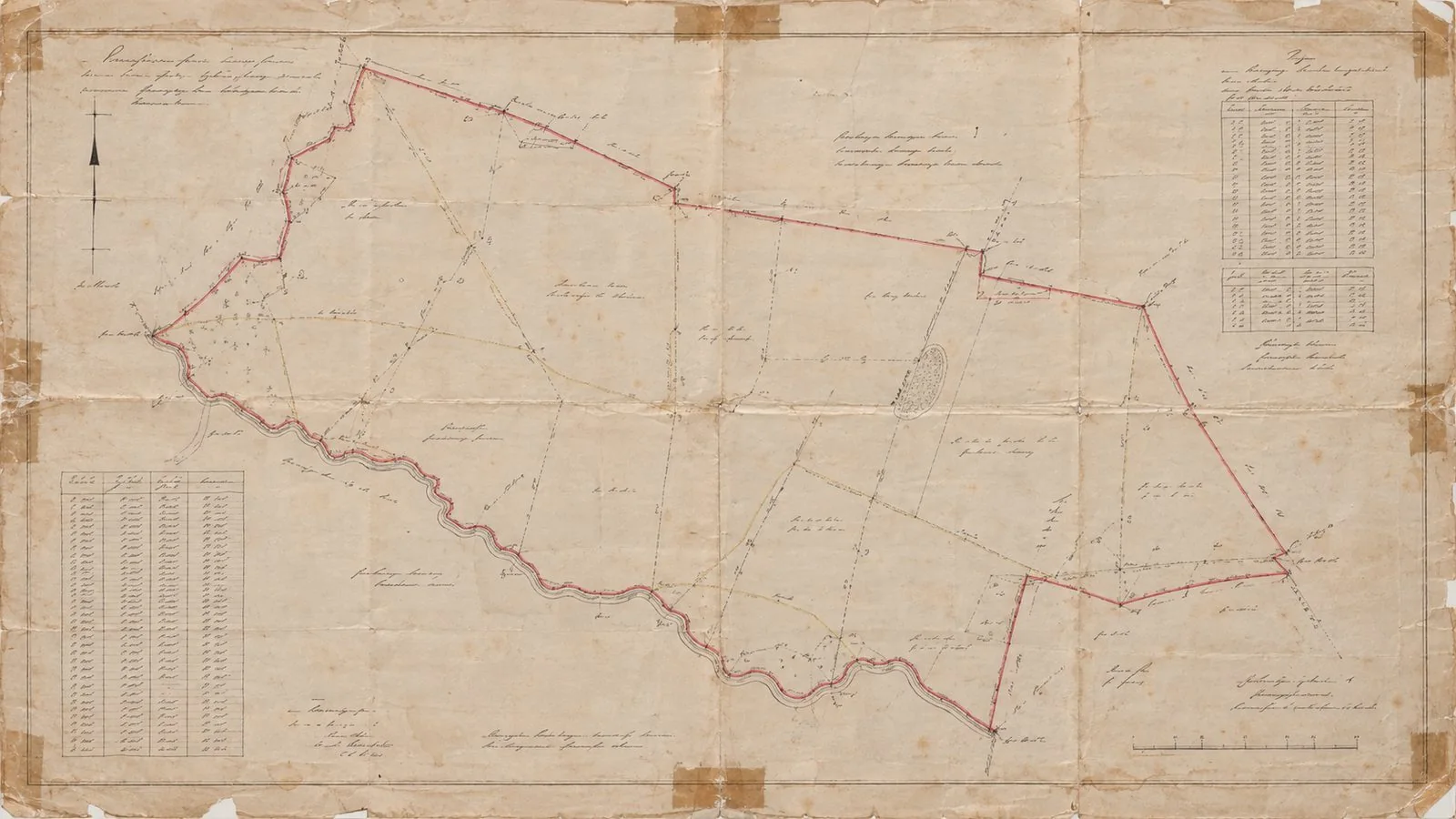
Just over half of Mexico — 50.8% of the national territory — is held this way. Roughly 99.8 million hectares, across about 29,800 ejidos and 2,400 comunidades, with more than five million people holding rights over it.
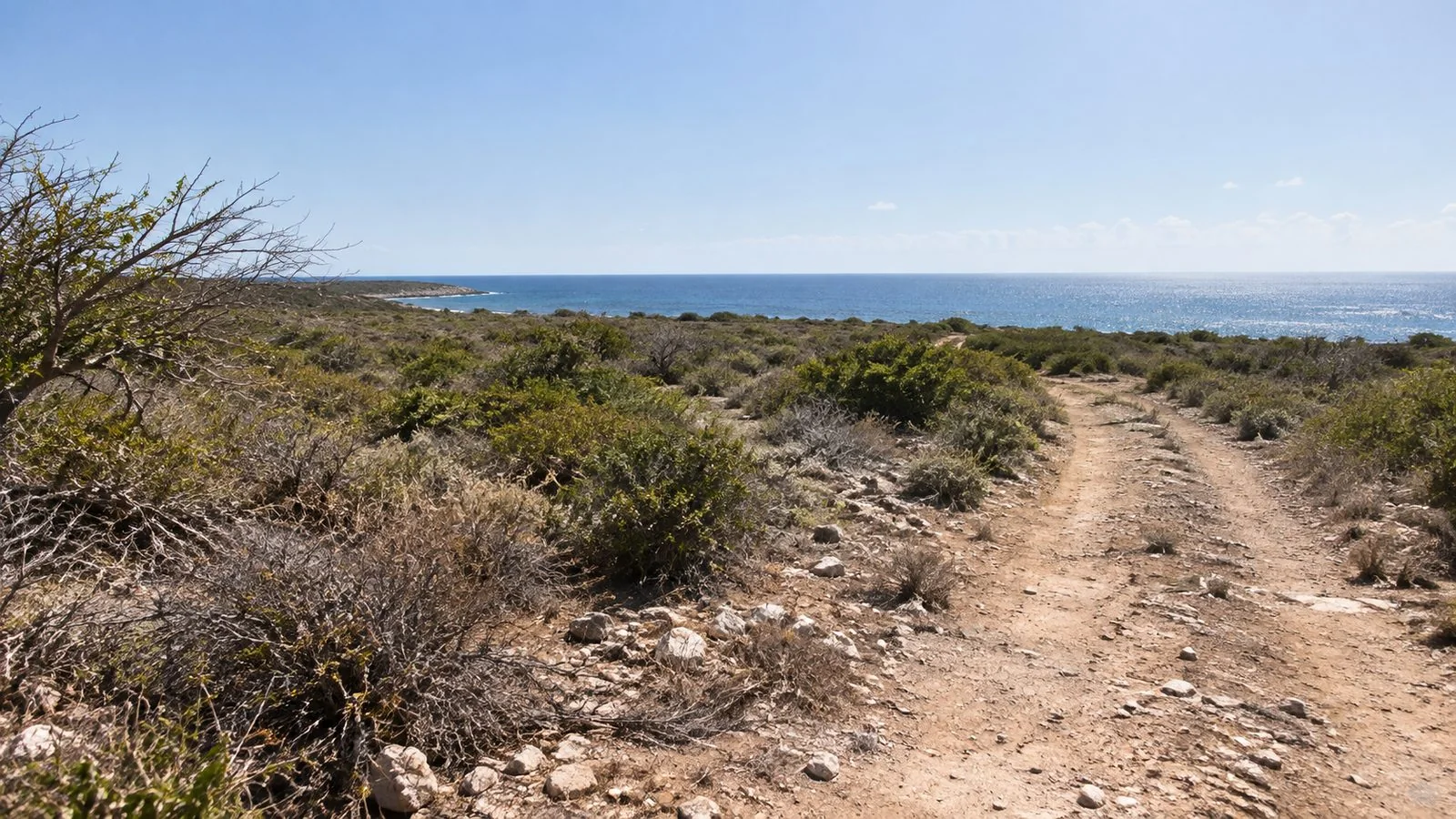
Since 1992, when the law first permitted conversion to private ownership, about 5% of that land has converted — some 5.29 million hectares. And the converted portion is not evenly distributed. It is concentrated in irrigation districts, urban expansion areas and tourist zones: the places foreign buyers are looking.
A foreigner cannot lawfully own land that has not completed conversion, whatever documents they were shown and whoever witnessed the signing. The verification that settles it is neither difficult nor costly. It simply has to happen at two registries, and before any money moves.
50.8%
of Mexico's territory is
social property
99.8M
hectares, across ~29,800 ejidos
and 2,400 comunidades
~5%
of it has converted to private
ownership since 1992
Source: Registro Agrario Nacional. Converted land is concentrated in irrigation, tourism and urban-expansion zones.
Where social property came from
Mexico's agrarian system is a product of the Revolution. Article 27 of the 1917 Constitution established that land belonged originally to the nation and gave the State authority to distribute it — a principle first set out in Carranza's agrarian law of 1915.
Land reached communities by more than one route. Some was restored to communities that had been dispossessed of it, particularly under the nineteenth-century disentailment laws. Much more was granted to communities that had none, by expropriating land from large private estates — the haciendas. And from the 1960s onward, further ejidos were created on national lands rather than from expropriation at all.
The distinction between the two present-day forms matters more than most guides suggest. Ejido land can be converted to private ownership through a defined process. Communal land is considerably harder to convert; in Oaxaca, for instance, privatisation generally requires a federal decree rather than a community vote. A buyer told that land is ‘ejido, but being regularised’ should establish which of the two is actually in question.
Membership is restricted. An ejidatario must be Mexican, an adult and resident in the community. A foreigner cannot become one and cannot hold agrarian rights.
The 1992 reform of Article 27, followed by the Agrarian Law of 1993, created the route out: a community may vote to convert parcels to full private ownership — dominio pleno — after which the land leaves the social property system and can be sold, mortgaged and transferred like any other private property.
Why the coast
The 1992 reform coincided with Mexico's coastal tourism boom, and the two are connected. Land near beaches had modest agricultural value and considerable development value. Communities holding it had reason to convert and sell; developers had reason to buy.
A substantial share of prime coastal real estate — across the Riviera Maya, Nayarit, Jalisco, Oaxaca and Baja — therefore sits on land that was ejido within living memory. The great majority of it converted properly, often decades ago, and now carries a clean chain of private title.
The risk is not that a property was once ejido land. A great deal of coastal property was, and converted correctly. The risk is buying land where the conversion was never completed, from someone presenting it as though it were.
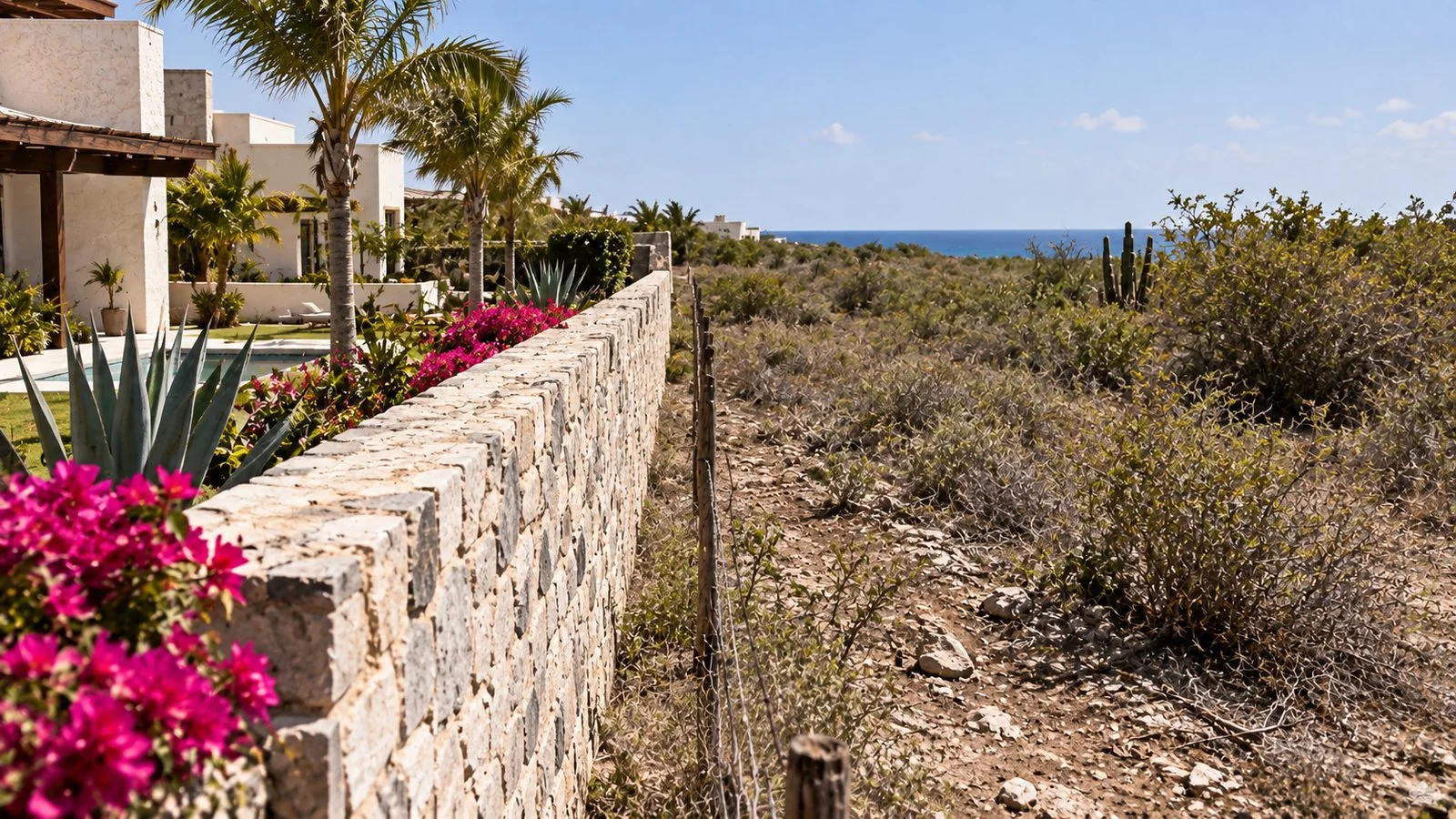
Where difficulties arise, they tend to arise in the same places: rapidly urbanising areas where development moved faster than administration; parcels adjacent to established developments where the original regularisation covered only part of the area; and pre-construction projects where conversion is described as part of the development plan rather than as something already finished.
What conversion involves, and how long it takes
Conversion runs through three stages, all of which must complete before the land is privately ownable:
- The community assembly votes. A qualified assembly decision, properly convened and minuted, releases the parcel from social property.
- The Registro Agrario Nacional issues title. The national agrarian registry records the change and issues the dominio pleno title.
- The state Public Registry inscribes it. The parcel is entered in the Public Registry of Property as private property. Until this is done the land is not, in practice, transferable to a foreigner.
Published estimates of duration vary widely and any single figure should be treated with caution. Some accounts describe six to eighteen months in favourable conditions; others put it at two to five years and note that success is not assured. The variance reflects the community, the state of the documentation and whether any internal dispute exists. What follows from it is simple enough: a conversion that has not happened should never be treated as one that is about to.
One step goes largely unmentioned. Ejido members generally retain a right of first refusal — the derecho del tanto — over land leaving the community. Where that right was not properly observed and waived, a sale that appears complete can be challenged afterwards.
Documents that resemble ownership and are not
Buyers who lose money here are rarely careless. They were shown paperwork, it carried seals and signatures, and somebody described as a professional confirmed it was in order. The difficulty is that several genuine agrarian documents look like title to anyone unfamiliar with the system.
What a buyer needs is a clean escritura pública for the parcel as private property, inscribed at the state Public Registry, with a traceable chain running back through the conversion.
Looking at coastal land or a parcel with an agrarian history? Amanah verifies status at both the national agrarian registry and the state Public Registry before a client commits money, and reports what is found in writing.
Legal Due Diligence & Title ReviewHow to verify it — two registries, two different questions
Verification requires searching in two places, and the most common error is treating one as a substitute for the other. They answer different questions.
The Registro Agrario Nacional holds the record of social property and of parcels that have adopted dominio pleno. It answers: has this land left the social property system at all? That is a question about the parcel's legal status, and no search of the private property registry can settle it.
The state Public Registry of Property holds the private title record. It answers: who owns this property, and what is the chain? A properly converted parcel appears here with an inscribed escritura and a coherent history of ownership.
A parcel that completed conversion appears correctly in both. One that did not will show a gap, and the gap is the answer regardless of the seller's explanation.
Worth separating from a check buyers more often hear about. The certificate of freedom from encumbrances shows whether a property carries a mortgage, a seizure order or a legal claim. It says nothing about whether the land was ever ejido — a parcel can be entirely free of registered charges and still not lawfully saleable to a foreigner.
Where each of these belongs in the transaction is set out in the due diligence sequence and when each check has to happen. One further check is worth making on any coastal parcel: whether it also falls within the restricted zone, which determines whether a bank trust is required. Agrarian origin and restricted-zone position are separate questions and a single property can raise both.
If you have already bought
The position depends on where the conversion stopped.
Where conversion completed and the paperwork is merely disordered, the problem is usually administrative and resolvable — locating the agrarian title, confirming the Public Registry inscription and correcting the chain.
Where conversion never completed, the buyer does not hold ownership and cannot obtain it unilaterally. Mexican agrarian law recognises acquisitive prescription in narrow circumstances, pursued before a Unitary Agrarian Court, but it requires demonstrating that the parcel was acquired from the rightful ejidatario and held peaceably and publicly. It is a claim to be argued, not a remedy to be applied.
In either case the first step is establishing the factual position at both registries before deciding anything — and doing so with someone who has no stake in the answer being convenient.
A note on sourcing
Ejido risk is reasonably well covered in English, and most of that coverage is accurate. Almost all of it is published by agencies and brokerages, which is worth knowing only because it explains why it tends to end in the same place — rely on us to check. Both registries are public and the verification is open to anyone. What matters is that whoever carries it out has nothing riding on the result, a point we make at greater length in why the agent showing you property cannot represent you.